Filter by
# Debug Box
/home/n1082660/public_html/opac.sukmalhokdigital.sch.id/lib/SearchEngine/DefaultEngine.php:615 "Search Engine Debug 🔎 🪲"
Engine Type ⚙️: "SLiMS\SearchEngine\DefaultEngine"
SQL ⚙️: array:2 [
  "count" => "select count(distinct b.biblio_id) from biblio as b left join mst_publisher as mp on b.publisher_id=mp.publisher_id left join mst_place as mpl on b.publish_place_id=mpl.place_id where b.opac_hide=0 and (b.biblio_id in(select bt.biblio_id from biblio_topic as bt left join mst_topic as mt on bt.topic_id=mt.topic_id where mt.topic like ?))"
  "query" => "select b.biblio_id, b.title, b.image, b.isbn_issn, b.publish_year, mp.publisher_name as `publisher`, mpl.place_name as `publish_place`, b.labels, b.input_date, b.edition, b.collation, b.series_title, b.call_number from biblio as b left join mst_publisher as mp on b.publisher_id=mp.publisher_id left join mst_place as mpl on b.publish_place_id=mpl.place_id where b.opac_hide=0 and (b.biblio_id in(select bt.biblio_id from biblio_topic as bt left join mst_topic as mt on bt.topic_id=mt.topic_id where mt.topic like ?)) order by b.last_update desc limit 10 offset 0"
]
Bind Value ⚒️: array:1 [
  0 => "%World Book%"
]
World Book M.13
1 is the ninth letter in our alphabet. This letter also ap peared in the alphabet used by the Semites, who once lived in Syria and Palestine. They may have taken its sym- bol from the Egyptian hieroglyphic (picture symbol) for a hand. The Phoenicians later took this letter into their al- phabet, and named it yod, meaning hand. The Greeks took the letter from the Phoenicians, and called it iota.…
- Edition
- -
- ISBN/ISSN
- 0-7166-0106-0
- Collation
- -
- Series Title
- -
- Call Number
- 999 Wor B
World Book N.O.14
1 is the ninth letter in our alphabet. This letter also ap peared in the alphabet used by the Semites, who once lived in Syria and Palestine. They may have taken its sym- bol from the Egyptian hieroglyphic (picture symbol) for a hand. The Phoenicians later took this letter into their al- phabet, and named it yod, meaning hand. The Greeks took the letter from the Phoenicians, and called it iota.…
- Edition
- -
- ISBN/ISSN
- 0-7166-0106-0
- Collation
- -
- Series Title
- -
- Call Number
- 999 Wor B
World Book I. 10
1 is the ninth letter in our alphabet. This letter also ap peared in the alphabet used by the Semites, who once lived in Syria and Palestine. They may have taken its sym- bol from the Egyptian hieroglyphic (picture symbol) for a hand. The Phoenicians later took this letter into their al- phabet, and named it yod, meaning hand. The Greeks took the letter from the Phoenicians, and called it iota.…
- Edition
- -
- ISBN/ISSN
- 0-7166-0106-0
- Collation
- -
- Series Title
- -
- Call Number
- 999 WOR E

World Book 17
is the 19bth letter inmour alphabet. it was also a letter in the alphabet of ancient semites, who once leaved in serial palestine.
- Edition
- -
- ISBN/ISSN
- 0-7166-0106-0
- Collation
- -
- Series Title
- -
- Call Number
- 999 WOR W
World Book G. 8
G is the seventh letter of our alphabet. Historians be- lieve that it came from an Egyptian hieroglyphic (picture symbol) for a boomerang-shaped throwing stick. The Greeks made it the third letter of their alphabet, and used it for the sound of our g. The Romans borrowed the letter from the Greeks, and used it for both gand k sounds. Later, they added a vertical stroke to it, and used the new f…
- Edition
- -
- ISBN/ISSN
- 0-7166-0106-0
- Collation
- -
- Series Title
- -
- Call Number
- 999 WOR W

WORLD BOOK F. 7
F is the sixth letter of our alphabet. Historians believe that the letter came from a symbol used by the Semites, who once lived in Syria and Palestine. They named it waw, meaning hook. The ancient Greeks later took the symbol into their own alphabet and called it digamma They used it to represent the sound of win English. The Romans were the first to use the letter to represent our sound for f…
- Edition
- -
- ISBN/ISSN
- 0-7166-0106-0
- Collation
- -
- Series Title
- -
- Call Number
- 999 WOR W

World Book B.2
B is the second letter of our alphabet. It was also the second letter in the alphabet used by the Semites, who once lived in Syria and Palestine. They called it beth, their word for house. Historians believe the word came from an Egyptian hieroglyphic (word picture) for a house. The Greeks borrowed the letter from the Phoeni- cians and called it beta. Our word alphabet comes from the names of t…
- Edition
- -
- ISBN/ISSN
- 0-7166-0106-0
- Collation
- -
- Series Title
- -
- Call Number
- 999 WOR W
WORLD BOOK T.19
T is the 20th letter of our alphabet. It was also a letter in the alphabet of the Semites, who once lived in Syria and Palestine. They called the letter taw, their word for mark. They used a cross-shaped mark they may have bor- rowed from an Egyptian hieroglyphic (picture symbol) used as a check mark. The Greeks borrowed the letter from the Phoenicians. However, when the Greeks adopt- ed the le…
- Edition
- -
- ISBN/ISSN
- 0-7166-0106-0
- Collation
- -
- Series Title
- -
- Call Number
- 999 WOR W

WORLD BOOK So Sz 18
- Edition
- -
- ISBN/ISSN
- 0-7166-0106-0
- Collation
- -
- Series Title
- -
- Call Number
- 999 WOR W
- Edition
- -
- ISBN/ISSN
- 0-7166-0106-0
- Collation
- -
- Series Title
- -
- Call Number
- 999 WOR W
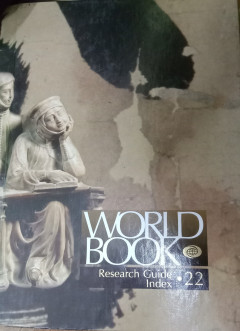
WORLD BOOK REASERCH GUIDE INDEX.22
Learning to be an effective writer is an important part of ed- ucation. Schoolwork involves a steady stream of writing assign- ments, and many jobs require the writing of effective letters, mem- os, and reports. Writing also plays a role in personal life, when peo- ple fill in forms or write e-mails or letters to friends and relatives.
- Edition
- -
- ISBN/ISSN
- 0-7166-0106-0
- Collation
- -
- Series Title
- -
- Call Number
- 999_WOR_W
 Computer Science, Information & General Works
  Philosophy & Psychology
  Religion
  Social Sciences
  Language
  Pure Science
  Applied Sciences
  Art & Recreation
  Literature
  History & Geography